
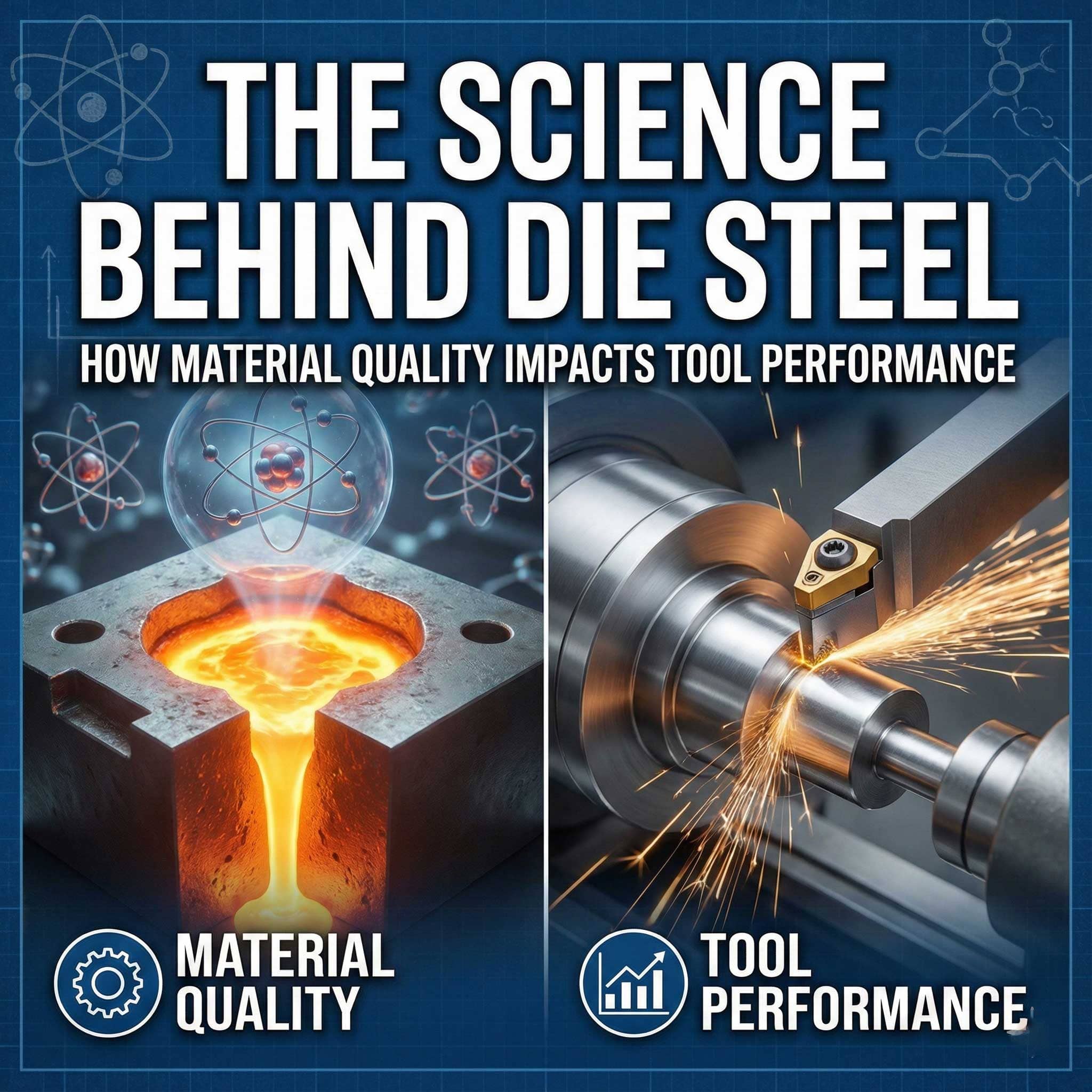
In the precision manufacturing and tooling industry, the performance of any machine/tool depends on the materials from which it's made. The material used for these equipments/tools is the one and only “Die Steel”. Die steel is one of the reasons why tools last long, work accurately, and stay strong under pressure.
In this blog, let’s break down the science behind die steel in the simplest way.
Why Does Die Steel Matter So Much?
Die steel refers to a type of special steel that is used to create tools known as dies. These tools can cut, shape, or form materials. We all know that the performance of any tool depends 100% on the material it’s made from. Die steel plays a major role in how well a tool performs and how long it lasts. Every industry that cuts, shapes, or forms material depends on dies. The quality of steel used to make those dies directly affects productivity. If the die steel is of poor quality, then many problems will come:
- Faster wear and tear
- Reduced tool life
- Higher maintenance costs
- High production cost
So, when the die steel is high quality, everything improves—efficiency, speed, accuracy, and even the final product.
The Science Behind High-Performance Die Steel
Let’s understand the science behind the high performance die steel.
1. Hardness and Strength: The Steel’s Ability to Resist Wear Hardness and strength are the main reasons why some tools last months longer. In the manufacturing industry, tools are constantly in contact with other materials. High-quality die steel has controlled hardness, which means:
- It stays sharp longer.
- It performs better under pressure
2. Heat Resistance: Working Without Losing Strength
Another property of die steel is heat resistance. Many operations like metal stamping, generate heat. Poor steel becomes soft when heated. High-quality die steel:
- Maintains strength at high temperatures
- Reduces deformation
- Works longer under continuous use
This is why hot work steels (like H13) are designed with special chemical elements.
3. Chemical Composition: The Secret Formula
The behaviour of die steel comes from its mix of elements like:
- Carbon (strength)
- Chromium (hardness & corrosion protection)
- Vanadium (wear resistance)
- Molybdenum (toughness & heat resistance)
Types of Die Steel and Their Use
Different tooling applications demand different mechanical properties, so die steels are divided into multiple types for specific industrial needs.
There are mainly three types of die steel.
1. Cold Work Steel
Used for: cutting, blanking, and forming cold materials.
Strengths: high wear resistance, sharp edges.
2. Hot Work Steel
Used for: forging, die casting, high-temperature tools.
Strengths: heat resistance, toughness at elevated temperatures.
3. Plastic Mould Steel
Used for: moulds, injection moulding tools.
Strengths: polishability, toughness, corrosion resistance.
Each type has different properties depending on the industry. So you have to select the best type of die steel as per your needs.
Consider the application, load, temperature, wear conditions, and choose a reliable supplier to ensure you get the right material grade.
Final Thoughts: Why Choosing the Right Supplier Matters?
The right material ensures strength, durability, and high precision, while poor steel leads to failure and losses. Understanding the science behind die steel helps you choose better and get more value from every tool you use. You have to select the best supplier for the die steel. Because a reliable supplier ensures:
- Authentic material grades
- Correct chemical composition
- Proper hardness levels
- Certification & testing
- Consistent stock availability
This is why companies like Sandeep EdgeTech make a difference—focusing on quality, precision, and reliable supply for industries across India.