
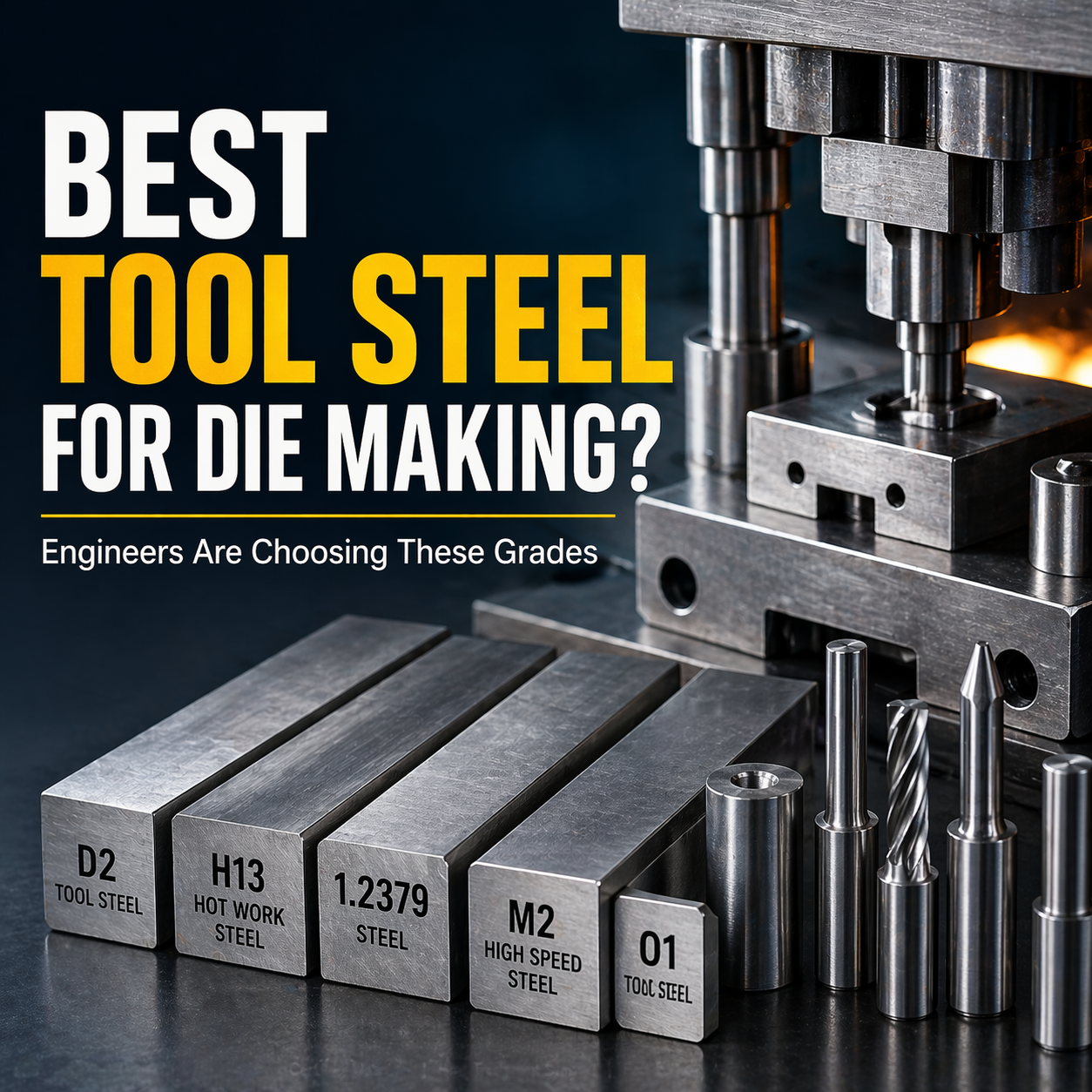
Not all tool steels are built equal and in die making, the wrong grade can cost you an entire production run. Whether you're sourcing from a hot work steel supplier or looking for a reliable plastic mould steel supplier, the grade you specify at the design stage defines everything: tool life, cycle count, maintenance frequency, and total cost per part.
Here's what experienced engineers are actually choosing and why.
The Grades That Perform
- D2 Tool Steel : The Cold Work Standard
D2 tool steel is the most trusted name in cold work steel for die applications. With 11–13% chromium and a hardness range of 58–62 HRC, it delivers outstanding wear resistance across high-volume stamping, blanking, and forming operations. Engineers running millions of cycles consistently return to D2 tool steel for its predictable performance and long service life.
- H13 : Hot Work Applications
For dies exposed to temperatures above 300°C think die casting, hot forging, and extrusion H13 is the industry standard. Its chromium-molybdenum-vanadium composition maintains hardness up to 650°C, resisting thermal cracking and fatigue that would destroy a cold work steel grade within a few thousand cycles.
- 1.2379 Steel : European Grade Precision
Equivalent to D2 in composition, 1.2379 steel is widely specified across European and Indian manufacturing for blanking dies, punching tools, and cold forming applications. Its fine carbide structure offers excellent edge retention and dimensional stability post-hardening - a key advantage for precision tooling where the best tool steel for die making decisions are most critical.
- High Speed Steel : For Demanding Thin-Gauge Work
When edge retention and hardness above 63 HRC are non-negotiable particularly in fine blanking and thin material stamping sourcing from a quality high speed steel supplier matters as much as the grade itself. M2 and M42 remain the preferred choices for progressive die punches under high impact loads.
How to Choose
- High volume cold work?→ D2 tool steel or 1.2379 steel
- Thermal cycling or hot forging?→ H13 from a trusted hot work steel supplier
- Precision thin-gauge stamping?→ M2 from a certified high speed steel supplier
- Prototype or short runs?→ O1 for ease of machining
For manufacturers in India, working with a dependable tool and die steel supplier ensures consistent material certification, proper heat treatment support, and grade availability without lead-time delays.
Conclusion
The best tool steel for die making starts with matching the right grade to your exact operating conditions. Whether you need cold work steel for mass production stamping, a specialised high speed steel supplier for precision tooling, or a trusted plastic mould steel supplier for mould-grade requirements, getting the specification right is the most cost-effective decision you'll make before production begins. For businesses across India, sourcing certified tool and die steel in Delhi with proper documentation and heat treatment support makes all the difference in die life, downtime, and cost per part.
Looking for certified tool steel grades? Connect with our team for grade-specific recommendations and fast delivery.